




Korean strawberries dominate the market in Thailand’s cool season. They arrive every year from December to March, and almost all of them are one variety: Seolhyang (설향, meaning “the scent of snow”). Big, round-bottomed, juicy, sweet and fragrant, they cost noticeably less than Japanese strawberries — which is why they’re the strawberry most Thais know best in the cooler months.
This article focuses on Korean strawberries: the standout varieties, why they’ve won over Thai shoppers, the cold-chain system that gets them here fresh, and how to tell the varieties apart by sight. For an overview of strawberries from every country, their nutrition, and the full guide to choosing, washing and storing them, read our main article, Everything you need to know about strawberries.
Why Are Korean Strawberries So Popular in Thailand?
- A flavor that suits Thai tastes — sweet up front, very fragrant, soft and juicy, without the sharp tartness of many Western strawberries
- Affordable prices — several times cheaper than Japanese strawberries of similar quality, so people buy them for themselves, not just as gifts
- Fast, fresh arrivals — Korea is only a few hours’ flight away, and its end-to-end cold chain is among the most rigorous anywhere
- The Korean wave — Korean-style cafés and picnic spreads have made Korean strawberries a symbol of the cool season
Korean Strawberry Varieties
1. Seolhyang (설향) — effectively Korea’s national strawberry, accounting for most of the country’s plantings. Developed in Korea and grown largely around Nonsan, it’s large and plump with a rounded bottom, bright glossy red, soft and juicy, with a clear sweet fragrance. Its one weakness is delicate flesh that bruises easily, so it has to be shipped with care.
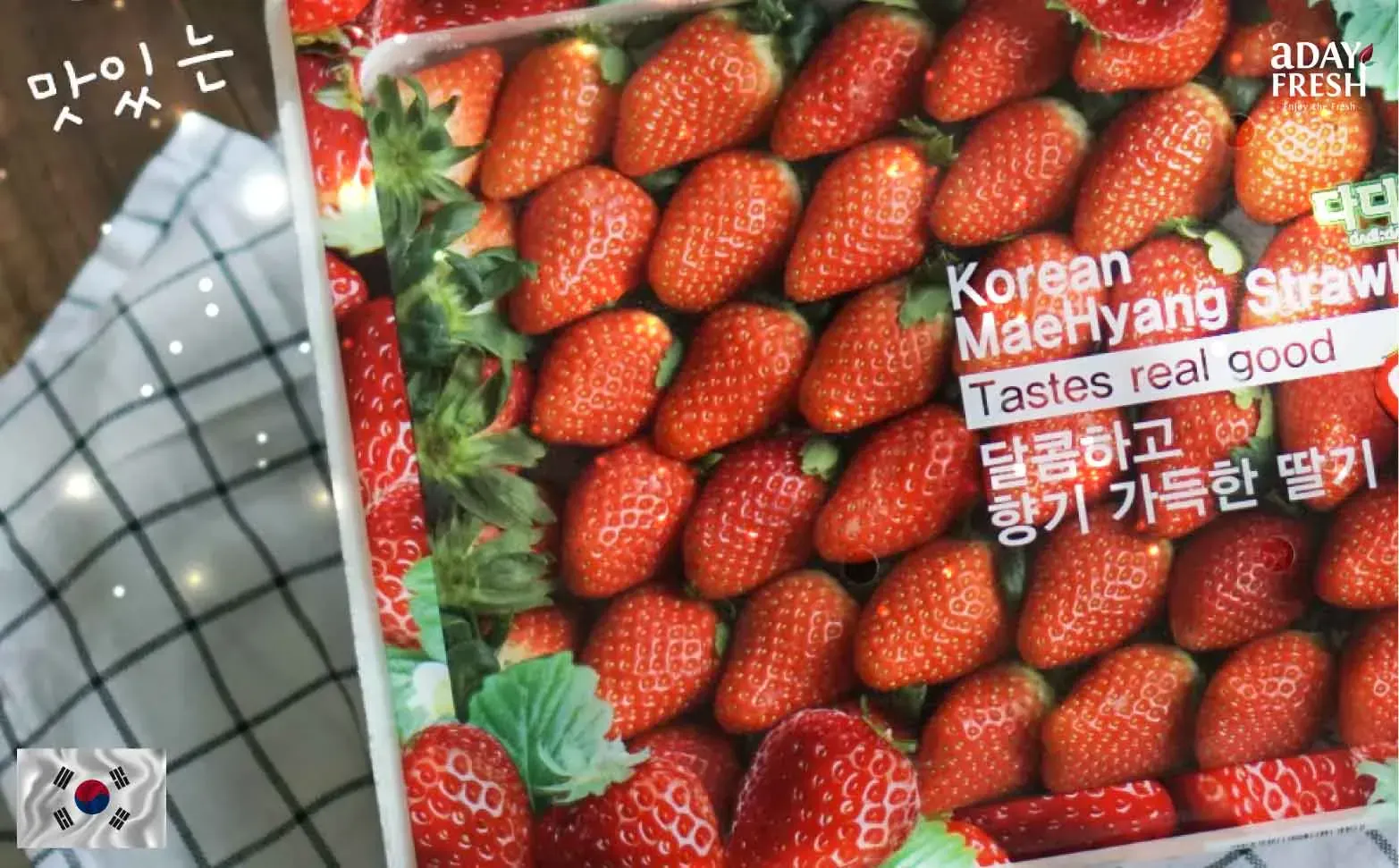
2. Maehyang (매향) — the export variety. It’s slender with a pointed tip and noticeably firmer than Seolhyang, so it keeps longer. Sweet with a touch of tartness, it’s popular for desserts and for shipping to distant markets because it travels well.
3. Geumsil (금실, “golden silk thread”) — a newer premium variety Korea is promoting as a successor. Well shaped, firmer than Seolhyang but still juicy, with a sweet, distinct aroma. It’s been turning up in Thailand more and more recently.
4. Kingsberry (킹스베리) — a giant strawberry that can fill your palm; one is practically a snack on its own. Soft and juicy and slightly less sweet than Seolhyang, it’s sold in gift-grade boxes and appears in Thailand at the height of the season.

5. Korean Pink Strawberry — a special variety Korea has started sending to Thailand in recent seasons. Pale pink all over, very sweet, with a scent reminiscent of peach. It’s rare and tends to sell out quickly every time a shipment lands.
Korean Varieties at a Glance
| Variety | Shape | Texture / Flavor | Best for |
|---|---|---|---|
| Seolhyang | Plump, rounded bottom, large | Soft, juicy, sweet and fragrant | Eating fresh — the one you’ll see everywhere |
| Maehyang | Slender, pointed tip | Firm, sweet-tart, keeps well | Desserts / stocking up |
| Geumsil | Neat, uniform shape | Firm yet juicy, strongly aromatic | Premium eating |
| Kingsberry | Giant, palm-sized | Soft, juicy, gently sweet | Gift boxes |
| Pink Strawberry | Medium, pink all over | Very sweet, peach-like aroma | A rare treat to give |
The Cold Chain: How Korean Strawberries Arrive Fresh
Despite their delicate flesh, Korean strawberries arrive fresh thanks to a cold chain that runs all the way from farm to destination. It includes CO₂ treatment to firm up the fruit, airborne sterilization with ClO₂, and packing in modified-atmosphere (MA) film, which keeps them fresh 2–3 days longer than standard film. For the full details, see our main strawberry article.
Korean vs. Japanese Strawberries
| Korean | Japanese | |
|---|---|---|
| Main varieties | Seolhyang (almost the entire market) | Many, varying by prefecture (Amaou, Tochiotome, etc.) |
| Flavor / texture | Sweet and fragrant, soft and juicy | More complex flavor, firmer and crisper |
| Price | Affordable enough to buy often | Premium, mainly bought as gifts |
| Available in Thailand | December – March | November – February |
In short: if you want to eat them all season long, go Korean. If you want a gift that wows the moment the box opens, go Japanese. Read more about the Japanese side in Japanese strawberry varieties.
How to Pick Good Korean Strawberries
- Check the leaves — bright green and perky means they haven’t been in Thailand long
- Check the skin — taut and glossy, with seeds that aren’t sunken and no watery bruises. Seolhyang is thin-skinned, and bruising spreads fast
- Always look at the bottom of the box — the bottom layer tells you how old the pack really is
- Refrigerate them right away — don’t leave them in the car; Seolhyang’s soft flesh can’t handle room temperature. For the full washing and storage guide, see our main article
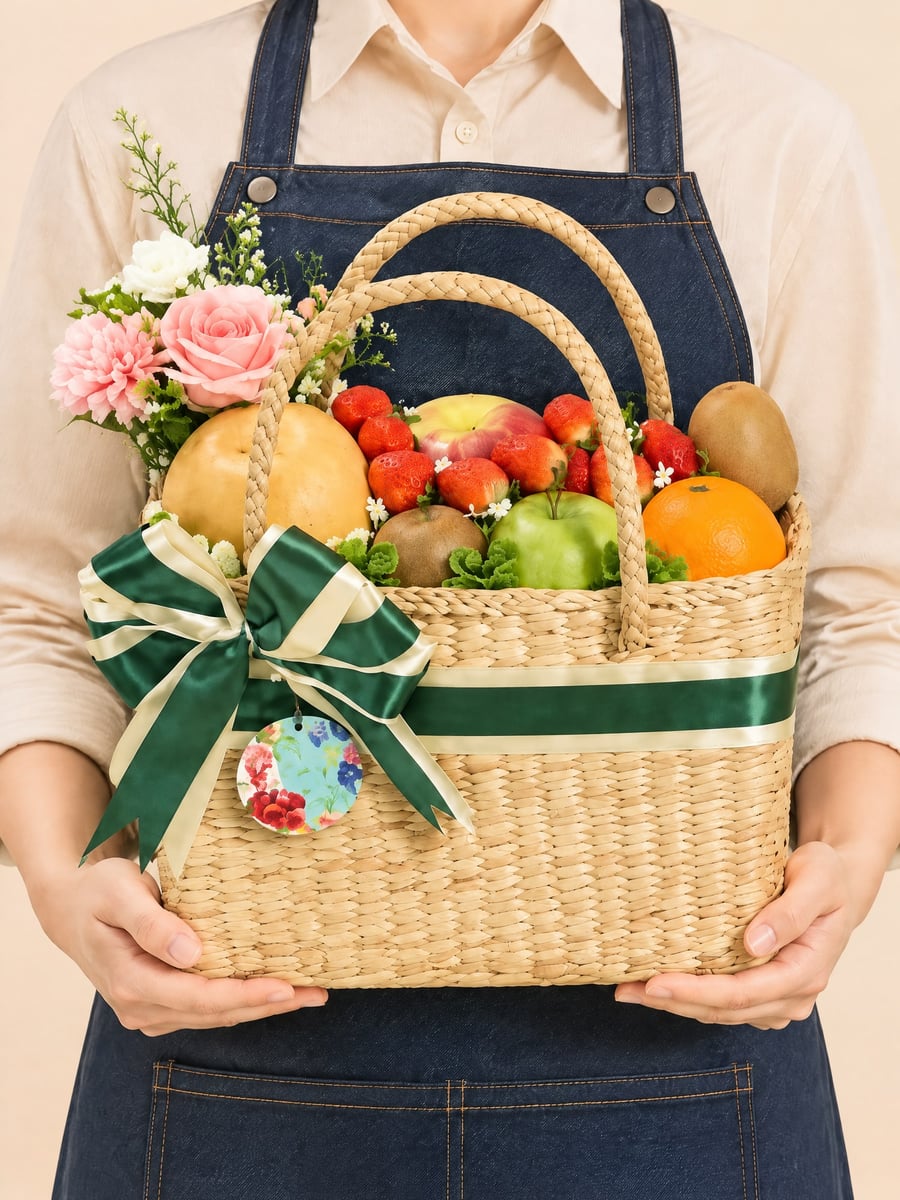
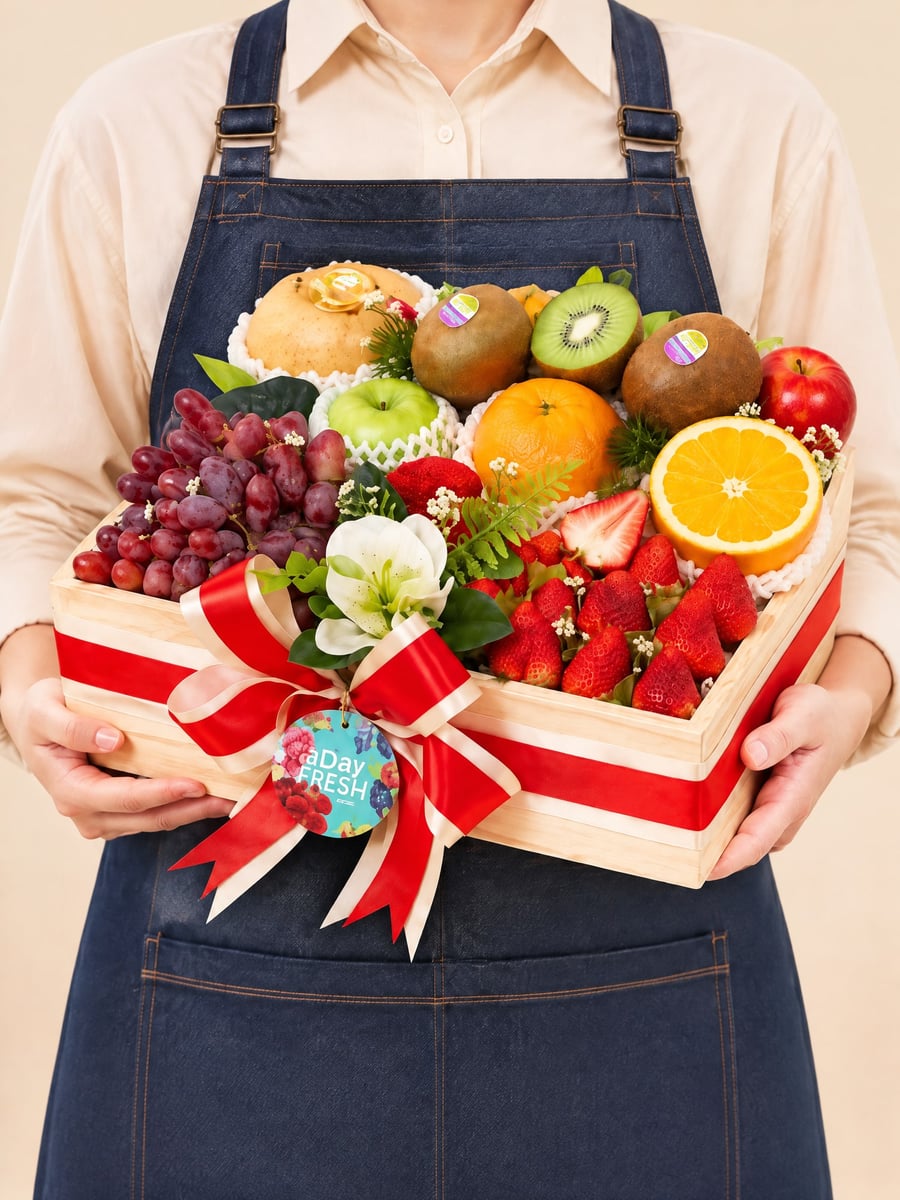
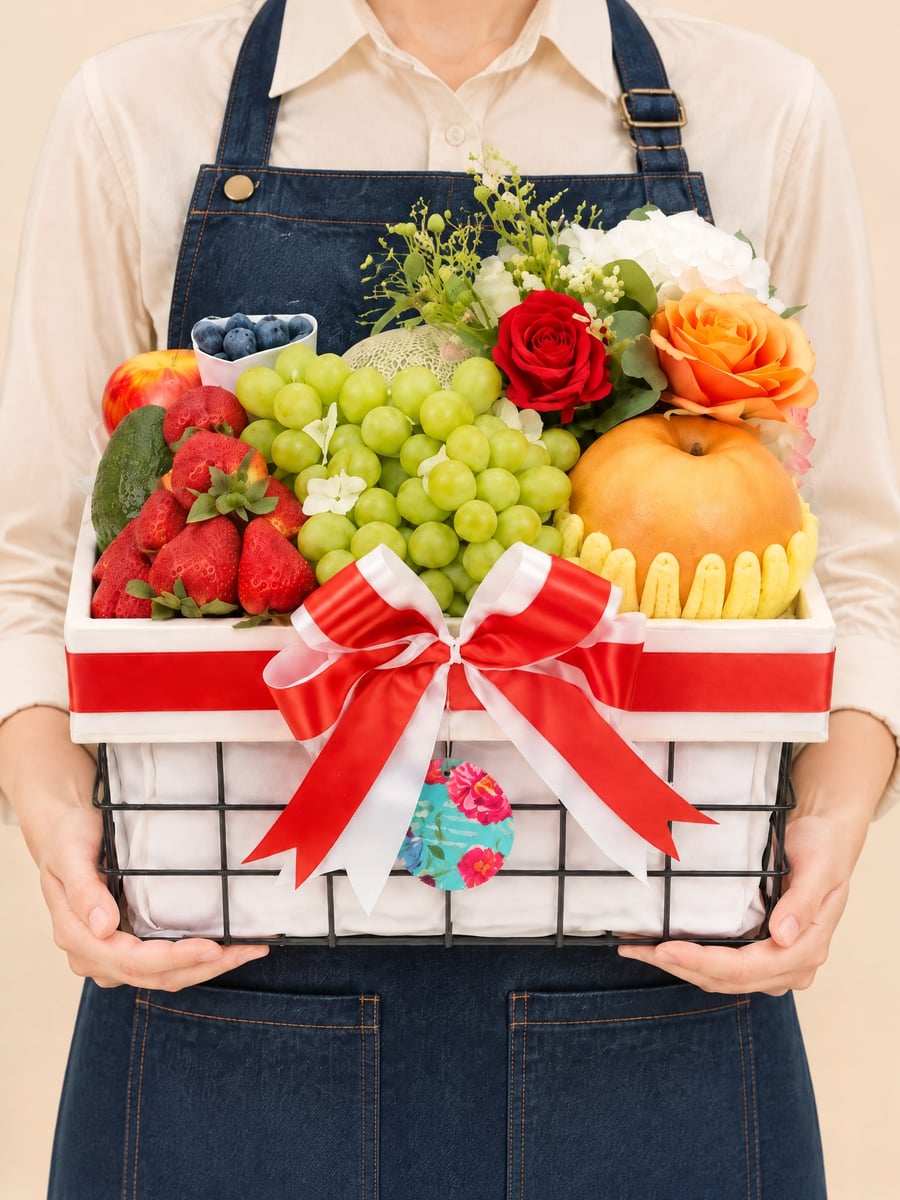
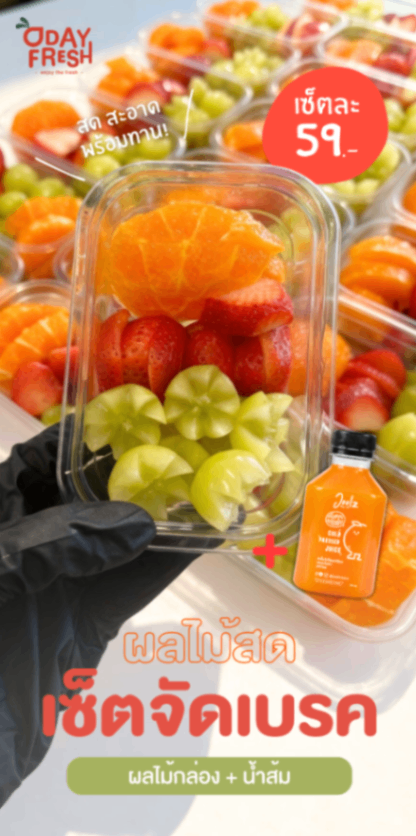
Every cool season, aDay Fresh selects premium Korean strawberries for our fruit boxes and gift baskets. Their bright red instantly brings a basket to life, and they’re one of the easiest fruits for people of any age to enjoy. Express delivery within 3 hours across Bangkok.
Order now — choose from our ready-to-send gift baskets, arranged fresh on the delivery day, with free delivery on orders of 3,000 THB or more. Need it there today? See same-day fruit basket delivery near me — express delivery within 3 hours across Bangkok and nearby provinces.