








Christmas is the day Christians celebrate the birth of Jesus. It falls on December 25 every year, and Christmas Eve is the night before, December 24. Today it’s a festival people celebrate all over the world, whatever their faith. This article covers the history of Christmas and why it falls on December 25, the meaning behind the Christmas tree, the star and Santa Claus, the Christmas star parade in Tha Rae, Sakon Nakhon, and the fruit linked to the season in different countries.
Quick answer
Christmas 2026 falls on
Friday, December 25
Christmas Eve is Thursday night, December 24, 2026 · Christmas is not a public holiday in Thailand
What Is Christmas, and Why December 25?
The word Christmas comes from “Christ’s mass,” the feast celebrating the birth of Jesus. For Christians, it marks the day God came into the world as a human, born as a baby in a stable, which makes it a season of hope and joy.
Western churches celebrate on December 25. Eastern Orthodox churches that still follow the Julian calendar for their liturgy celebrate the same feast on January 7 by the calendar most of us use today. The season then runs for another 12 days, until January 6, the feast marking the visit of the Magi.
The Bible Doesn’t Give Jesus’s Birthday
Something many people don’t realize: the New Testament never gives a date for the Nativity. December 25 was settled on later. There is evidence that the church in Rome was officially celebrating Christmas on that day by around AD 336, during the reign of Emperor Constantine. The oldest record naming it as Christ’s birthday is a Roman calendar from the mid-4th century, which reads: “Christ born in Bethlehem of Judea.”
So why that date? Historians have two main theories, and the debate is still open.
| Theory | The idea | The counterargument |
|---|---|---|
| 1. Borrowed from Roman festivals | Romans already celebrated around the winter solstice, with Saturnalia, a month of feasting and drinking, and the birthday of the “Unconquered Sun” (Sol Invictus), which Emperor Aurelian made a festival on December 25 in AD 274. The church may have chosen the date to absorb these existing festivals. | Britannica points out that the early church took pains to distance itself from pagan beliefs, so borrowing a festival outright seems at odds with that. Andrew McGowan, writing for the Biblical Archaeology Society, notes that the idea doesn’t appear anywhere in ancient Christian writing; the earliest evidence is just a note in the margin of a 12th-century manuscript. |
| 2. Calculated from the date of conception | Around AD 200, Tertullian recorded that Jesus died on March 25. Early Christians believed he was conceived and died on the same date, and counting nine months on from March 25 gives December 25. Later, in AD 221, the historian Sextus Julius Africanus also gave the date of the Nativity as December 25. | McGowan considers this theory the stronger one, since early Christian writings support it, and it also explains the Eastern date: April 6 plus nine months gives January 6, Christmas in the Eastern churches. |
Worth knowing: an article from HISTORY says Pope Julius I chose December 25, and that it is “commonly believed” he did so to absorb Saturnalia. Britannica and the Biblical Archaeology Society, on the other hand, see the question as unresolved, so it’s best treated as one theory rather than settled fact.
Also worth noting: although Rome was celebrating Christmas by around 336, Britannica notes that it didn’t become a major Christian festival until the 9th century, and in the liturgy it still ranks below Good Friday and Easter.
Christmas Eve on December 24, and the Season of Advent
Advent: The Four Weeks Before Christmas
Christmas doesn’t start on December 25. Catholics have a season of preparation beforehand called Advent, from the Latin for “arrival,” which covers the four weeks leading up to the Nativity. According to the liturgical calendar of the United States Conference of Catholic Bishops (USCCB), the First Sunday of Advent in 2026 falls on November 29, and the liturgical color that day is violet.
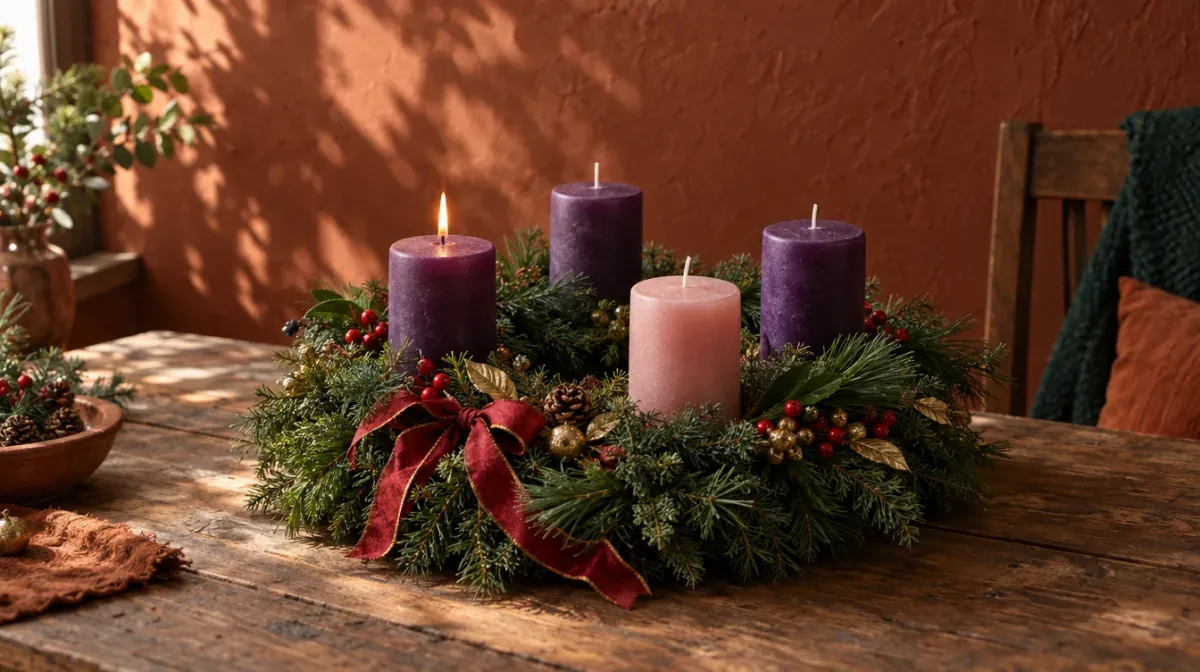
The symbol of the season is the Advent wreath, a ring of greenery holding four candles, one for each Sunday. The first candle is lit on the first Sunday, the first and second the following week, and so on until all four are lit. Many churches use three purple candles and one pink, often explained as standing for hope, peace, joy and love, in that order.
According to Britannica, the custom began in the 19th century with as many as 24 candles (one for each day from December 1), until so many candles proved impractical and the number was cut to four. As for the Advent calendar, with a little door to open each day, Britannica says the first printed ones were sold in Germany in 1851, while HISTORY traces its origins to Germany in 1903. The two sources don’t agree on the year.
What Happens on Christmas Eve?
Christmas Eve is the night of December 24, which in 2026 is a Thursday. There are three main traditions:
- Midnight Mass: Britannica notes that Catholic churches usually celebrate the first Mass of Christmas at midnight, with white as the liturgical color. In Tha Rae, Sakon Nakhon, a Christmas Mass is also held on the night of December 24 at St. Michael’s Cathedral.
- Exchanging gifts: across most of Europe and Latin America, presents are opened on the night of the 24th, following the belief that Jesus was born that night. In North America, they’re usually opened on the morning of the 25th.
- Hanging stockings: children hang up stockings or leave out shoes for Santa Claus to fill, along with milk and cookies as a thank-you.
In China, Christmas Eve has a tradition all its own: giving apples. More on that in the fruit section below.
Christmas Symbols and What They Mean
Where Did the Christmas Tree Come From?
Evergreens have long held special meaning for people in cold climates, staying green when everything else seems dead. Here’s how the Christmas tree as we know it appears in the historical record:
- 1494: Sebastian Brant records the custom of bringing fir branches into the home as decoration.
- 16th century: records show Christians in Germany bringing decorated trees into their homes.
- 1605: the first record of a fir tree decorated with apples, in Strasbourg.
- 1611: the first record of candles on a tree, by a Duchess of Silesia.
- 1846: the Illustrated London News publishes a picture of Queen Victoria and the German-born Prince Albert standing with their children around a Christmas tree, making the custom popular in Britain.
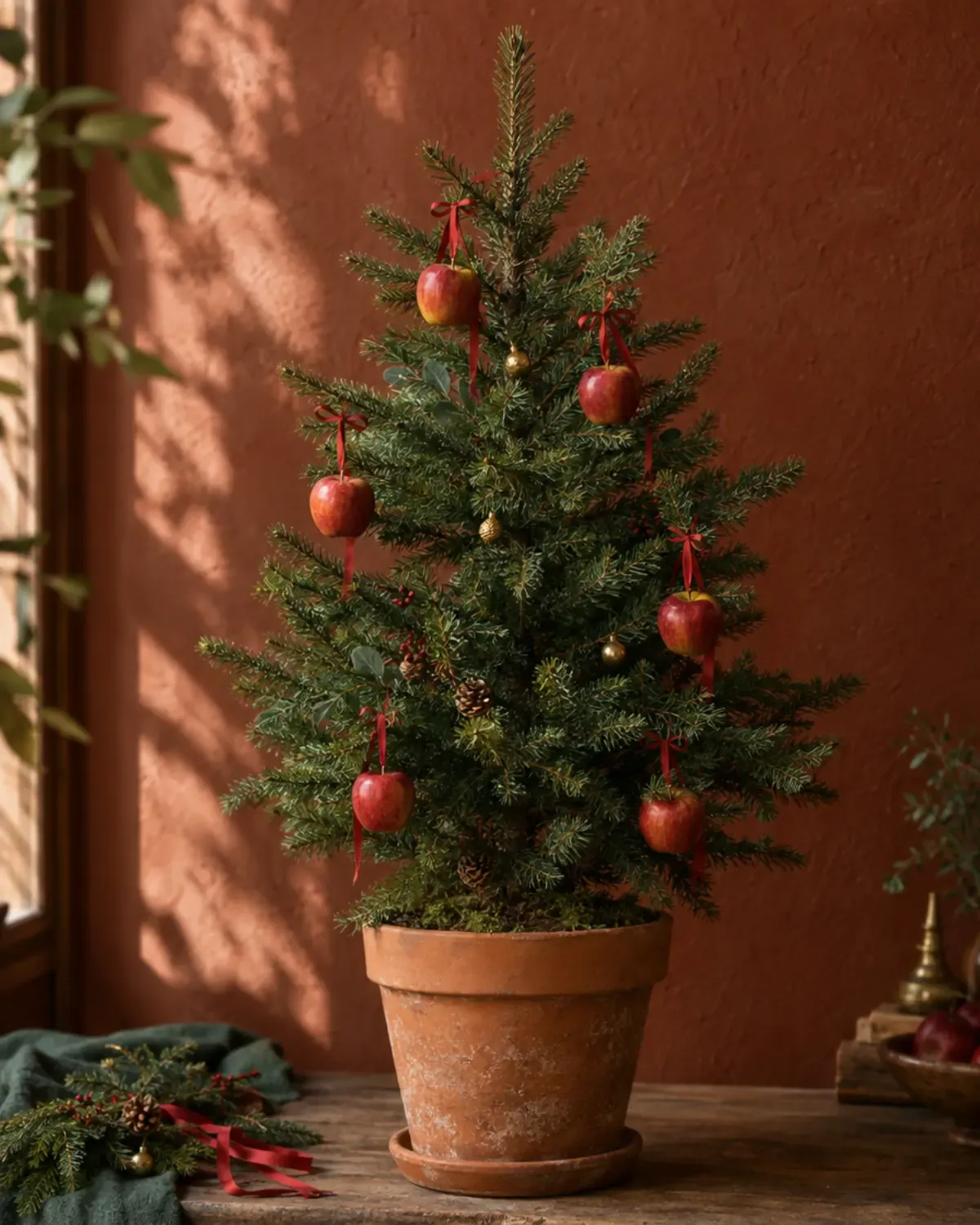
Here’s something fruit lovers will enjoy: according to one legend, the modern Christmas tree grew out of two older customs, one of them the “Paradise tree,” a fir hung with apples to represent the Tree of Knowledge in the Garden of Eden. As for Martin Luther being the first to put candles on a tree, the story goes that Luther was walking home one winter night, saw the stars twinkling through the branches of the firs, and wanted to recreate the scene at home.
The Star on Top of the Tree
The star comes from the Gospel of Matthew, in which the Magi follow the Star of Bethlehem to visit the infant Jesus. It stands for the guiding star on the night of the Nativity, and it’s also the origin of the star parade tradition in Tha Rae.
Why Are Christmas Colors Red and Green?
The best-sourced explanation comes from Spike Bucklow of the University of Cambridge, who says we inherited red and green from the Victorians. They, in turn, took the pairing from the paintwork on medieval church rood screens of the 15th and 16th centuries, where red and green were often paired. When these screens were restored in the Victorian era, the color scheme may have carried over into the year-end festivities.
Holly, with its green leaves and red berries in the depths of winter, played a part too. The idea that Coca-Cola made red and green the colors of Christmas isn’t quite right: Mental Floss cites an 1896 newspaper that already refers to “the Christmas colors, red and green,” decades before Coca-Cola put Santa in its ads.
Christmas Stockings
Legend has it that Saint Nicholas wanted to help a poor father who couldn’t afford dowries for his three daughters. He tossed bags of gold through their window at night, and one landed in a stocking hung to dry by the fire. From this story came the custom of secretly slipping gifts into children’s shoes or stockings.
In America, stockings hung over the fireplace appear as early as 1804, in a woodcut of Saint Nicholas that John Pintard handed out at a meeting of the New-York Historical Society; the stockings in the picture are filled with toys and fruit. Later, the poem “A Visit from St. Nicholas” also describes stockings hung by the chimney.
Santa’s Red Suit: Where It Came From (and No, Coke Didn’t Invent It)
We’ve already covered how the name Santa Claus comes from Saint Nicholas and the Dutch Sinter Klaas in our Christmas gift ideas article. Here, we look at how Santa came to look the way we know him.
- 1822: Clement Clarke Moore, a clergyman in New York, writes “A Visit from St. Nicholas” for his three daughters, describing Santa as a “jolly old elf,” round and plump, flying from house to house on Christmas Eve in a sleigh pulled by eight reindeer.
- 1881: political cartoonist Thomas Nast draws Santa as a stout man with a full white beard and a sack of toys. According to HISTORY, Nast gave Santa his red suit trimmed with white fur, his North Pole workshop, his elves and Mrs. Claus.
- Early 20th century: Snopes has collected images of Santa in a red suit, a red fur-trimmed hat and a black belt from 1906, 1908 and 1925, showing the look had already become standard.
- 1931: Coca-Cola hires illustrator Haddon Sundblom to draw Santa for its advertising for the first time, and keeps using him year after year.
In short, the belief that Coca-Cola created the red-suited Santa is a myth. Snopes concludes that the red-and-white Santa existed long before the Coke ads. What Coke did do was fix the image in a lot of people’s minds: before television and color newspapers, Coke’s magazine ads and billboards were the main place Americans saw Santa. “Coke merely popularized a borrowed image; it didn’t invent it.”
Christmas in Thailand and the Tha Rae Star Parade
In Thailand, Christmas Day is not a public holiday. The December 2026 public holiday calendar compiled by Thai PBS lists only the substitute holiday for National Father’s Day (Monday, December 7), Constitution Day (Thursday, December 10) and New Year’s Eve (Thursday, December 31). So Friday, December 25, 2026 is a normal working day, though plenty of Thais still celebrate with parties and gift exchanges.
The Christmas Star Parade in Tha Rae, Sakon Nakhon
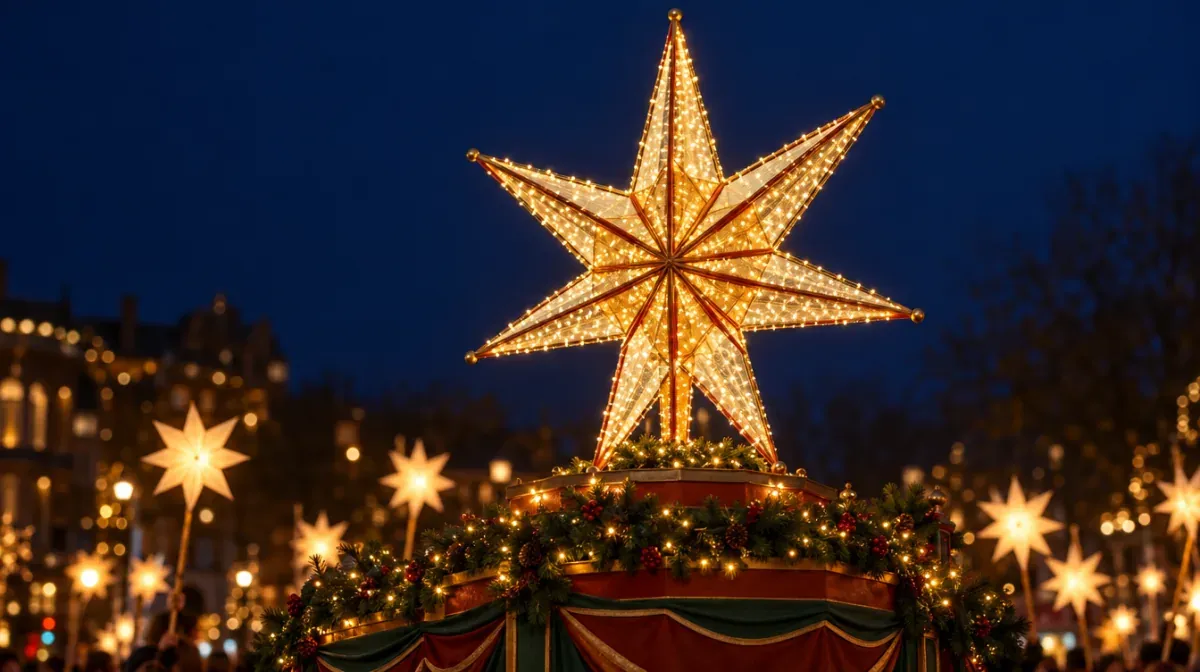
The community of Tha Rae, in Mueang Sakon Nakhon district, is known as the largest Roman Catholic community in Thailand. The Tha Rae Subdistrict Municipality describes it as more than 141 years old, with a grid layout like a Western town and French-style houses.
- How it began: the tradition dates back to December 25, 1982, when villagers made paper stars together to commemorate the guiding star on the night Jesus was born, then paraded them around the community to the cathedral.
- What it means: for the people of Tha Rae, the “star” symbolizes Jesus coming down to be born into the human world.
- From local custom to festival: the Tourism Authority of Thailand (TAT) began promoting it as a tourist event in 2003, and in 2025 it was elevated to a Signature Thailand Event.
- Two kinds of parade: the traditional procession of hand-held (small) stars around Sala Martino, and a parade of vehicles carrying large Christmas stars covered in twinkling lights. In 2024, Daily News reported more than 30 star floats, plus a star parade on the water at Don Koen Park on the shore of Nong Han lake.
- Main venues: St. Michael’s Cathedral, Sala Martino and the streets of Ban Tha Rae.
When Is the Tha Rae Star Parade in 2026?
As of early October 2026, no official dates have been announced for this year. Keep an eye on TAT and the Tha Rae Subdistrict Municipality. In the meantime, last year’s schedule gives a good idea:
| Date (2025) | Main events |
|---|---|
| Dec 20–24 | Walking street with the stars on display, food and OTOP (local products) stalls, light displays around the cathedral |
| Dec 23 | 18:00 parade of large star floats around the community · opening ceremony · drone show |
| Dec 24 (Christmas Eve) | 18:00 traditional small-star procession · Christmas Mass at the cathedral · Nativity play |
The sources don’t fully agree on the dates. TAT and the Tha Rae Subdistrict Municipality give December 20–24 for 2025, but Thairath reported December 20–26, while the municipality’s own document says the star parade is held “every year on December 22–23.” For the opening-night drone show, TAT says 100 drones, but the municipality’s schedule says 500. What the sources do agree on is that for the past two years, the large star float parade has been held on the night of December 23. And beyond Tha Rae itself, in 2024 Sakon Nakhon town also held a large star parade on December 25, from the King Rama V Monument plaza to St. Joseph Sakon Nakhon School.
Traditional Christmas Fruit Around the World
Fruit is more tied up with Christmas than most people think, and each country has its own seasonal favorites.
An Orange in the Stocking: Saint Nicholas’s Gold
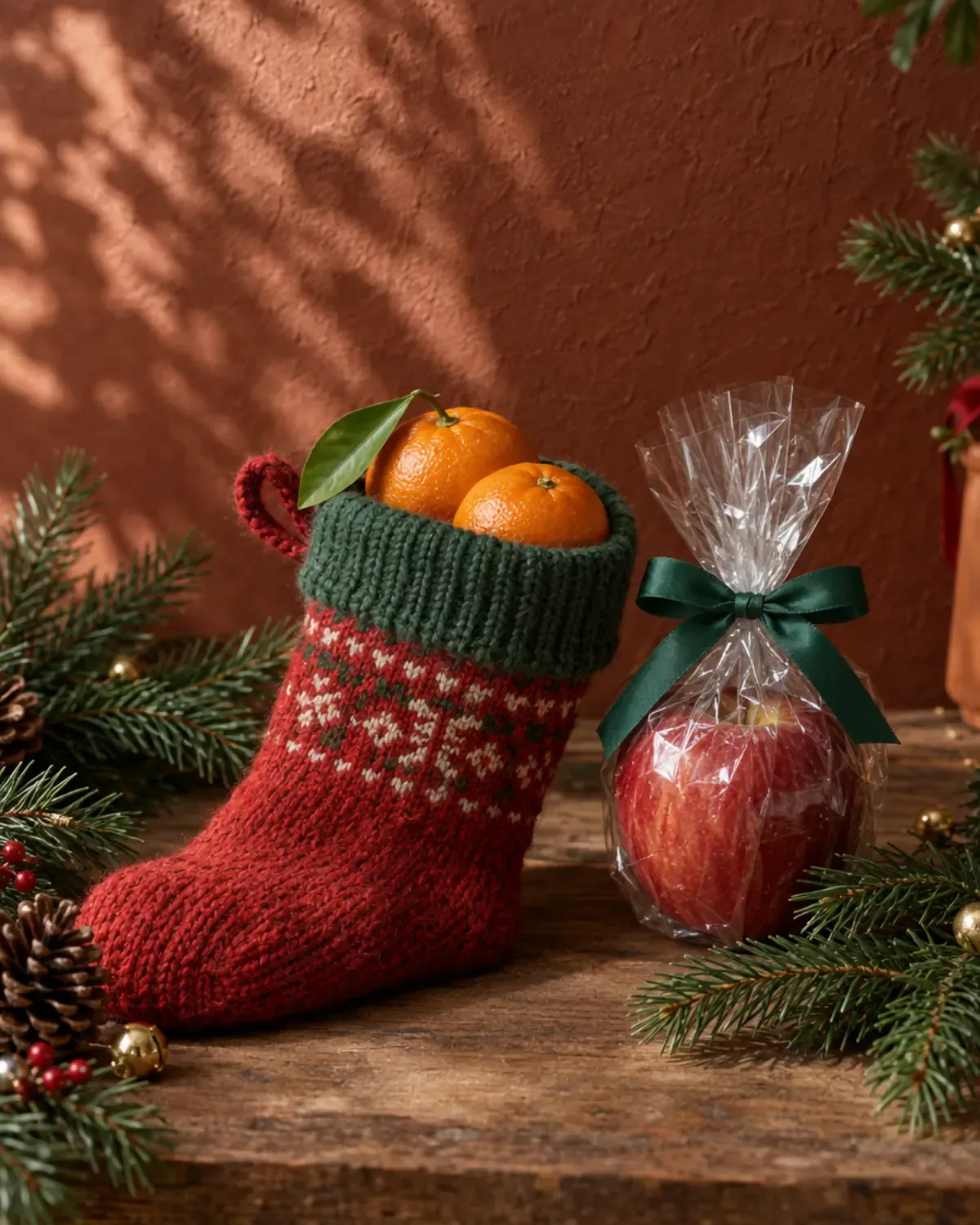
The custom of putting an orange in the toe of a Christmas stocking began in the 19th century, along with hanging stockings itself. Smithsonian Magazine offers three explanations:
- A stand-in for gold: the round, golden orange is thought to represent the “balls of gold” Saint Nicholas gave the three poor sisters, since oranges were far easier to come by than gold.
- A winter rarity: in late 19th-century Europe, oranges were scarce and expensive, so families on low incomes saved them as a treat for their children.
- Marketing and the Depression: in the early 20th century, California citrus growers promoted the idea that a stocking wasn’t complete without an orange, and during the Great Depression, oranges became an affordable luxury that went into children’s stockings in almost every home.
Christmas Eve Apples in China (平安果, Píng’ān Guǒ)
In Mandarin, Christmas Eve is 平安夜 (píng’ān yè), “the night of peace,” and the word for apple is 苹果 (píngguǒ). Because the first syllable sounds like the “píng” in the word for peace, apples were renamed 平安果, “the fruit of peace.” Eating or giving an apple that night is a wish for safety and peace in the year ahead.
Global Times quotes a Chinese folklorist who says the Christmas apple is a purely Chinese custom born from this wordplay. Apples sold at this time of year are often wrapped in cellophane, tied with ribbon or packed in heart-shaped boxes, and some have greetings written on the skin: growers stick on stencils before the fruit ripens, and the covered skin stays paler, leaving the characters visible. Today, many churches in China hand out peace apples to everyone who comes on Christmas Eve.
Strawberries on Japanese Christmas Cake
A Japanese Christmas cake means sponge cake with white cream and strawberries on top. It started with the Fujiya confectionery in Yokohama, which sold Japan’s first Christmas cake in December 1910, back then still a Western-style fruitcake. In 1922, the shop’s owner, who had studied in America, adapted the strawberry shortcake, swapping the scone-like biscuit for a soft sponge.
Savvy Tokyo explains that red and white are Japan’s colors for celebrations and match the national flag, which helped the cake catch on. But it was still a real luxury then, and only spread widely after the war, when Fujiya held its first Christmas cake sale in 1952. By the mid-1960s, strawberry cake was firmly part of Christmas in Japan.
Apples on the Christmas Tree
As mentioned in the Christmas tree section, the earliest decorations were real apples, from the Paradise tree hung with apples for the Tree of Knowledge to the apple-decked fir in Strasbourg in 1605. That makes the red apple a fruit that fits Christmas both in the West and in China.
A Red-and-Green Christmas Basket with Fruit That Tells a Story
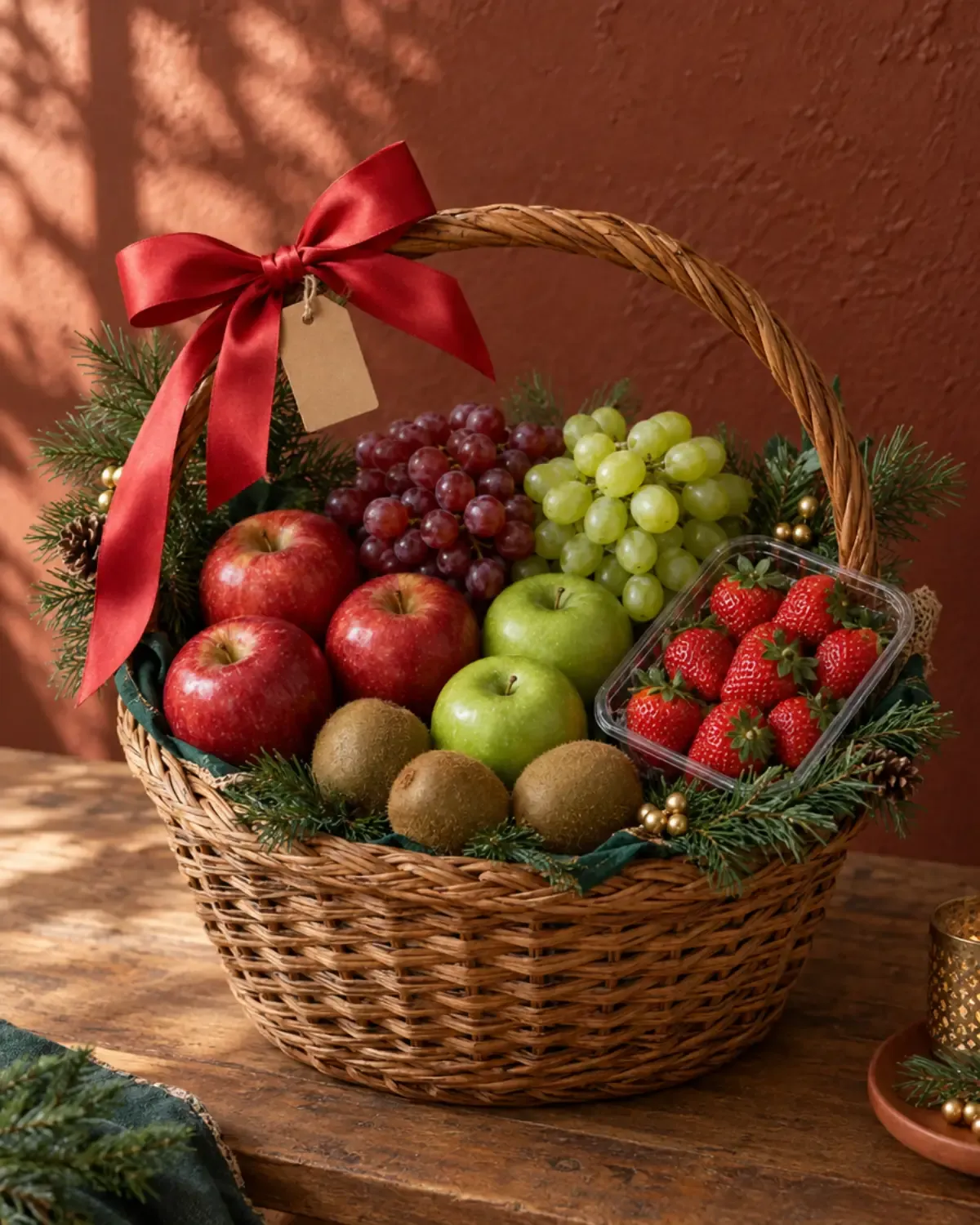
If you want a fruit basket that says “Christmas” without piling on decorations, let the colors of the fruit do the work, and tell the story through fruit that means something at this time of year.
- Red: red Envy apples (the peace apple of Christmas Eve) · strawberries (the fruit on Japanese Christmas cake; a seasonal item we stock in December) · seedless red grapes
- Green: Granny Smith green apples · seedless green grapes · green kiwis · Shine Muscat grapes for a premium basket
- Gold, for the gold coins: mandarin oranges, after the orange-in-the-stocking legend
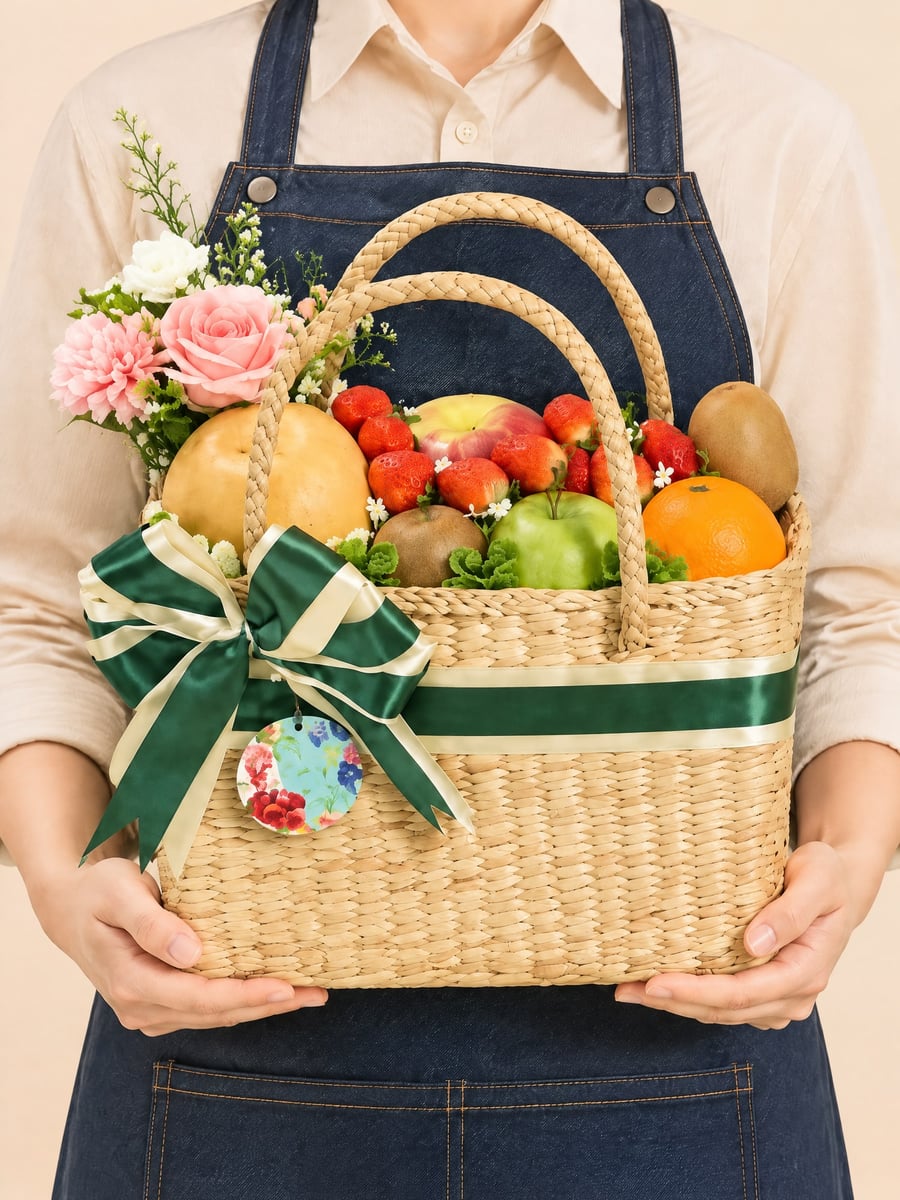
If you’d rather not put one together yourself, the Merry Fruitary basket has Envy apples, oranges, strawberries, seedless green grapes, avocado, snow pear, blueberries and a Japanese melon, covering red, green and gold in one basket. Just ask our team for a Christmas-colored ribbon. Every basket is arranged fresh on the day of delivery and comes with a free handwritten greeting card.
If the recipient has young children at home, an adult should cut up the grapes before the kids eat them. The NHS (the UK’s National Health Service) advises cutting small round foods like grapes into quarters for young children, and always having an adult present while they eat.

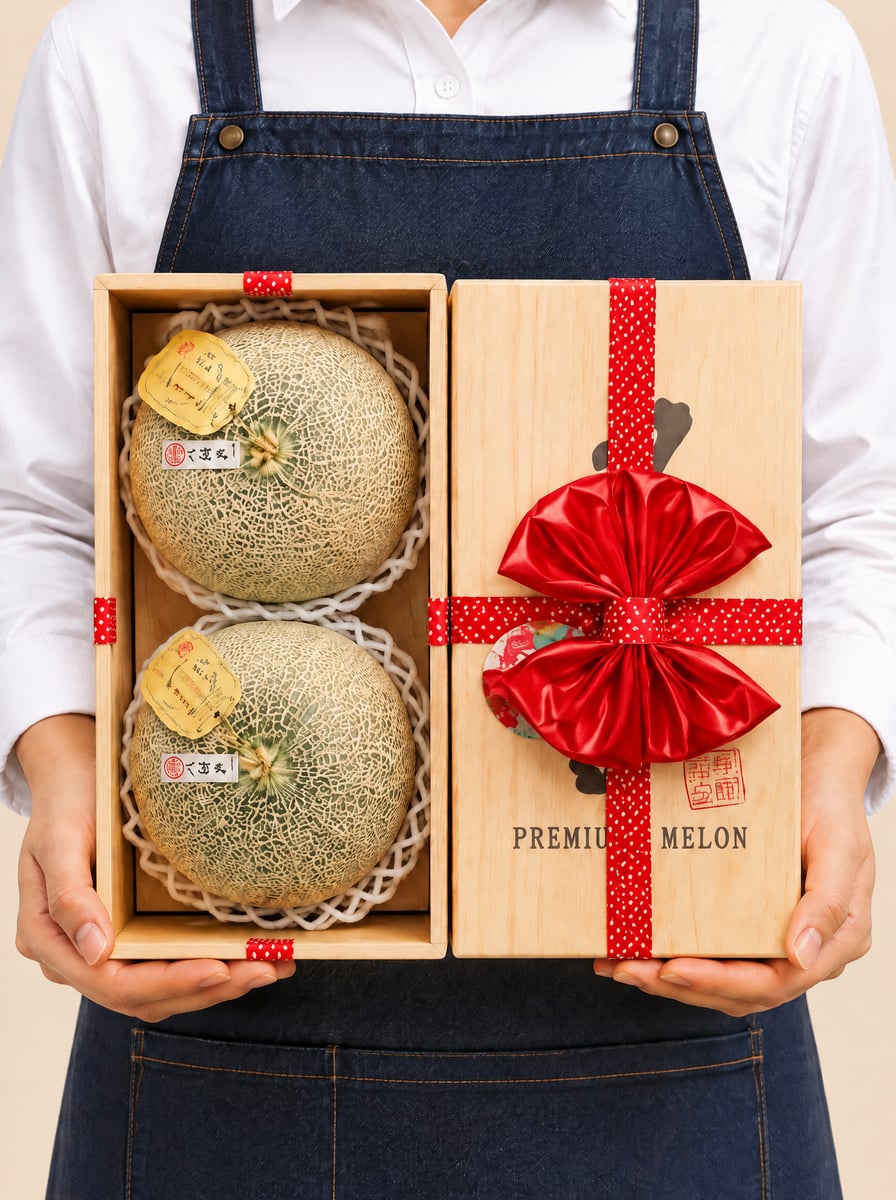
Japanese melon leads grapes, avocados and berries in a red-bow metal basket, for New Year

Fresh mandarins, bright orange and tempting, an easy everyday snack
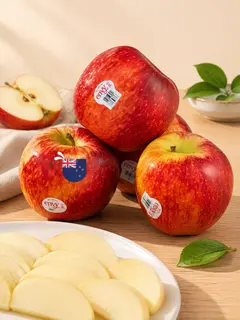
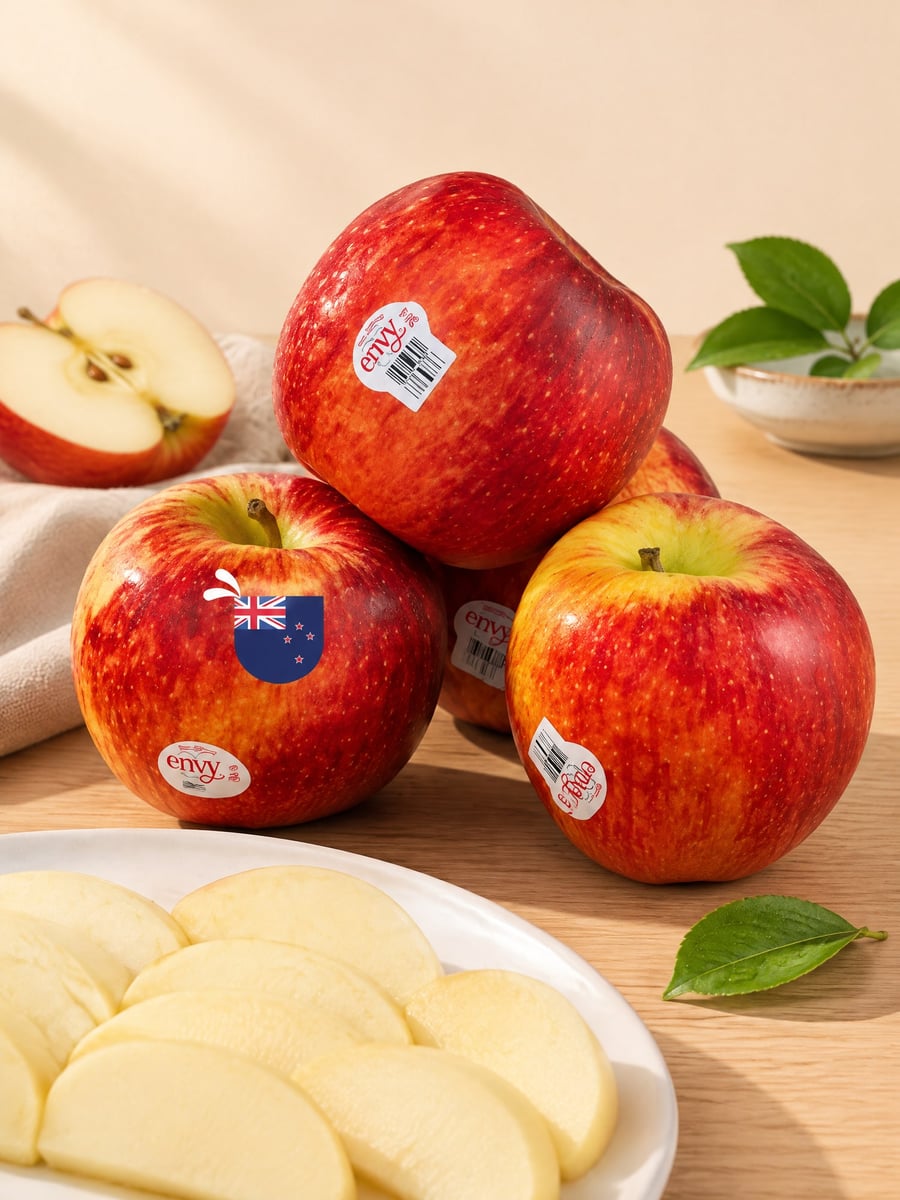
Premium Envy apples, beautiful, crisp, juicy and sweetly fragrant, great for biting into
Want to arrange a beautiful basket yourself? Follow our 6-step guide to making a fruit basket, or pick individual fruit from our fresh fruit range.
Christmas Gifts That Carry Over into the New Year
Not sure what to give whom? We’ve sorted gift ideas by recipient (partner, friends, elders, children), by children’s age and by budget, from Secret Santa gifts under 300 THB to gifts for senior colleagues and elders. Read more in Christmas gift ideas.
With New Year less than a week after Christmas, many companies send clients a single round of gifts that covers both. If you’re ordering several baskets for corporate clients, see how to choose and the etiquette of sending them in New Year gifts for clients, or browse our New Year baskets, which work for both holidays.
Christmas FAQ
Is Christmas 2026 a public holiday in Thailand?
No. Friday, December 25, 2026 is a normal working day. The public holidays in December 2026 are Monday the 7th (substitute holiday for National Father’s Day), Thursday the 10th (Constitution Day) and Thursday the 31st (New Year’s Eve).
When is Christmas Eve?
Christmas Eve is the night of December 24, which in 2026 is a Thursday. It’s the night Catholics go to Midnight Mass, and across most of Europe and Latin America it’s when people exchange gifts.
Why do we have Christmas trees?
Evergreens are a symbol of life in winter. Bringing decorated trees into the home is recorded in Germany from the 16th century. According to legend, one forerunner was the “Paradise tree,” hung with apples to represent the Tree of Knowledge in the Garden of Eden. The custom spread widely after a newspaper published a picture of the British royal family with their Christmas tree in 1846.
Did Coca-Cola really invent Santa’s red suit?
No. Santa in a red suit trimmed with white fur existed before Coke’s 1931 ads. HISTORY credits Thomas Nast with dressing Santa in red from the 1880s, and there are pictures of a red-suited Santa from 1906, 1908 and 1925. Coke simply spread the image further.
When should I go to the Tha Rae star parade in 2026?
As of early October 2026, no official dates have been announced. For the past two years, though, the large star float parade has been held on the night of December 23 and the traditional small-star procession on the night of December 24. Check the actual schedule with TAT or the Tha Rae Subdistrict Municipality before you travel.
Why do people in China give apples on Christmas Eve?
Because the word for apple (苹果, píngguǒ) sounds like the word for peace in the Chinese name for Christmas Eve (平安夜, píng’ān yè). So the apple became “the fruit of peace,” given as a wish for a safe year ahead.