




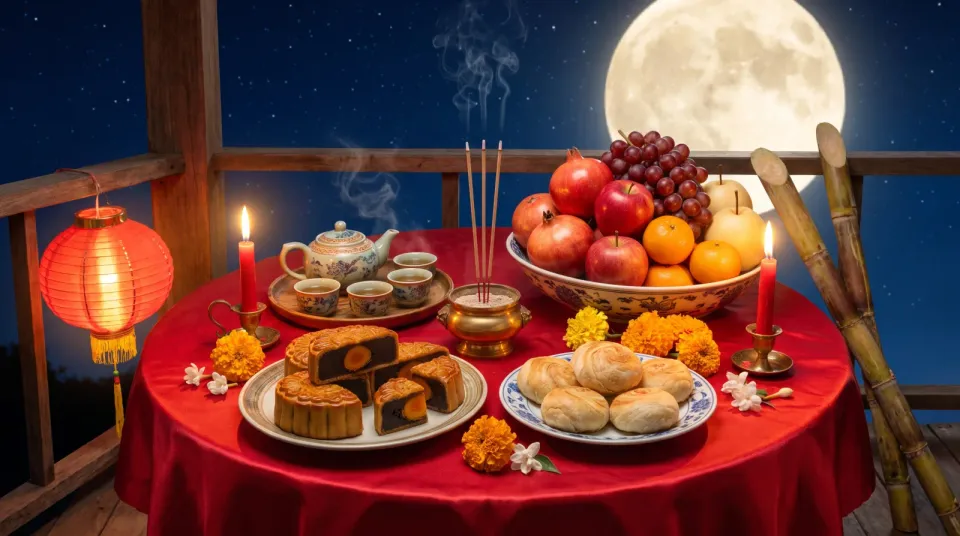
Sart Jeen (the Chinese Ghost Festival, also called the Zhongyuan Festival, 中元节) is the major mid-year occasion when Thai-Chinese families pay respects to their ancestors. It falls on the 15th day of the 7th month of the Chinese calendar. According to beliefs handed down for some 2,000 years, the 7th month is when the gates of the underworld open, and ancestral spirits and wandering souls come up to receive merit and offerings. So families set out offerings three times in a single day: for the household guardian spirit, for the ancestors, and for spirits with no family of their own.
Good to know
This year’s Sart Jeen falls on August 27, 2026
The 15th day of the 7th month of the Chinese lunar calendar. The date moves every year, usually landing in August or September
This guide covers everything about Sart Jeen: where it comes from, the deity and the legends behind it, why offerings are made three times, which offerings and auspicious fruits to prepare, which fruits are kept off the table, and the question everyone asks: “What color should I wear?”
What Is Sart Jeen?
Sart Jeen is the Chinese “7th month” festival. In Chinese it’s called the Zhongyuan Festival (中元节, Zhongyuan Jie); Mahayana Buddhists know it as Ullambana (盂蘭盆); and in English it’s usually called the Ghost Festival, because at its heart is the belief that spirits return to visit the world of the living. But for the families who observe it, it isn’t a spooky day at all. It’s a day of gratitude, when the whole family comes together once a year.
Where Sart Jeen Comes From: 2,000 Years of Belief, Two Legends
The tradition took root in ancient China around the Han dynasty and was fully established by the Tang dynasty, before crossing the sea with Chinese immigrants to Thailand. Its beliefs come from two major traditions that blended together.
The Taoist tradition: the birthday of Di Guan Da Di (地官大帝)
The Official of Earth, one of the Three Officials (San Guan), holds the power to pardon the sins of departed souls. On his birthday, it’s believed, the gates of the underworld open and spirits are allowed up to visit their descendants and receive offerings.
The Mahayana Buddhist tradition: the legend of Mulian
Maudgalyayana (Mulian in Chinese), an arhat with great spiritual powers, saw his late mother suffering as a hungry ghost and asked the Buddha what to do. The answer was to make offerings to the monastic community and dedicate the merit to her. This became the model for making offerings and dedicating merit to ancestors, and it’s why the day is about gratitude far more than ghosts.
How Many Times Are Offerings Made, and to Whom?
Thai-Chinese families (mostly of Teochew descent) traditionally make offerings three times in one day, in this order:
| Round | Time (by custom) | Offerings to | Where |
|---|---|---|---|
| 1. The household guardian spirit (Tee Chu Ia) | Early morning | The guardian spirit that protects the home | The household shrine |
| 2. The ancestors | Late morning, before noon | The family’s departed ancestors | The offering table indoors, in front of the ancestral tablets or photos |
| 3. Spirits with no family (Pai Ho Hia Ti) | Afternoon | Wandering souls with no descendants to honor them | Outside, in front of the house or by the roadside |
The third round is what makes Sart Jeen special: sharing merit even with spirits nobody remembers is considered the year’s great act of charity, which is why some families also call it “the day of compassion.”
What Do You Offer on Sart Jeen?
- Savory dishes: “sa sae,” three kinds of meat such as pork, duck and chicken, or “ngo sae,” five kinds for a larger spread, with steamed rice and the ancestors’ favorite dishes.
- Sweets: “khanom kheng” (sticky rice cake) and “khanom thian” (sweet sticky rice parcels), symbols of sweetness and prosperity.
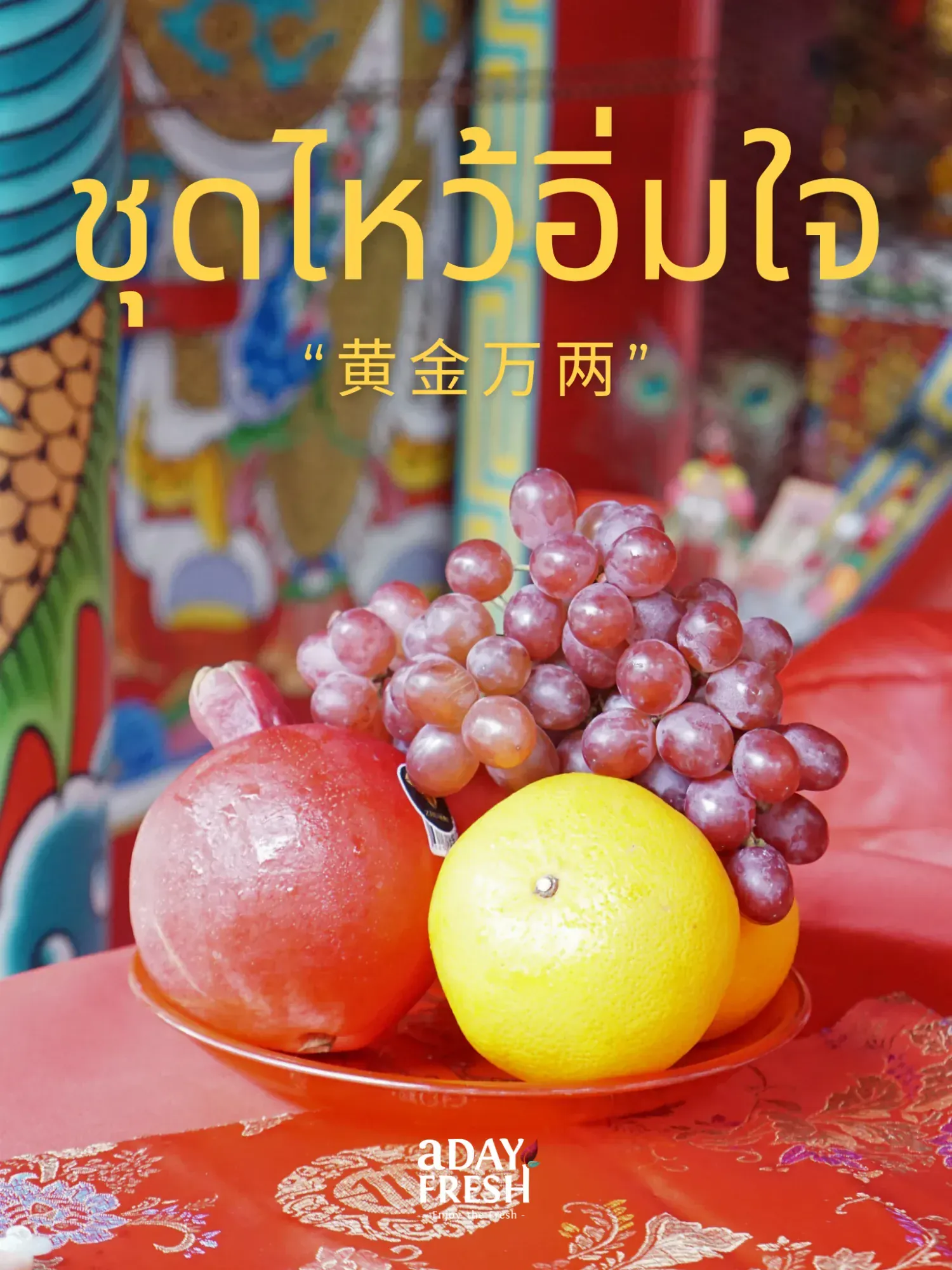
- Auspicious fruit: usually in odd numbers, 3 or 5 kinds (see the next section).
- Five cups of tea: a traditional way of honoring guests.
- Gold and silver joss paper: burned as wealth for the departed to use in the afterlife.
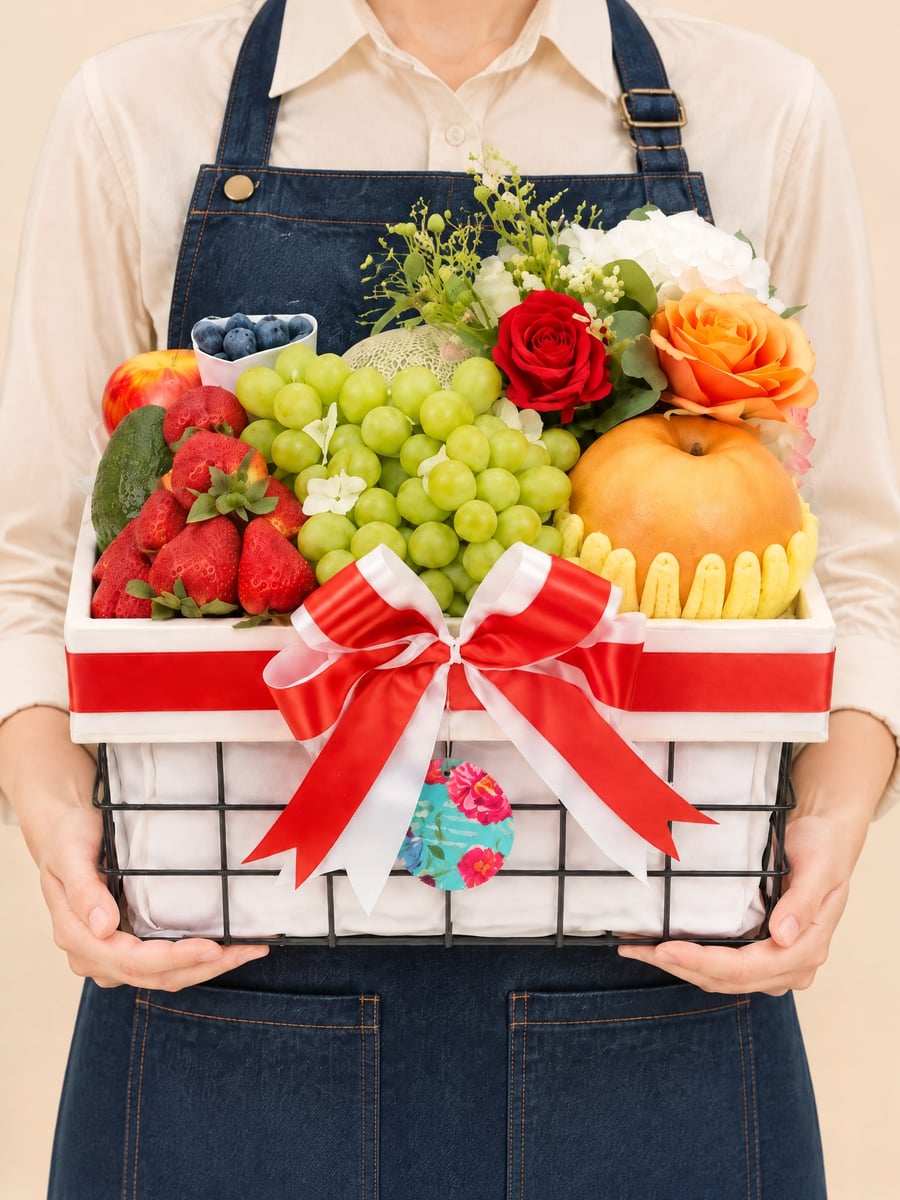
Making your own set? See how to choose the fruit and arrange it beautifully in our 6-step guide to making a fruit basket.
The 5 Auspicious Fruits for Sart Jeen and What They Mean
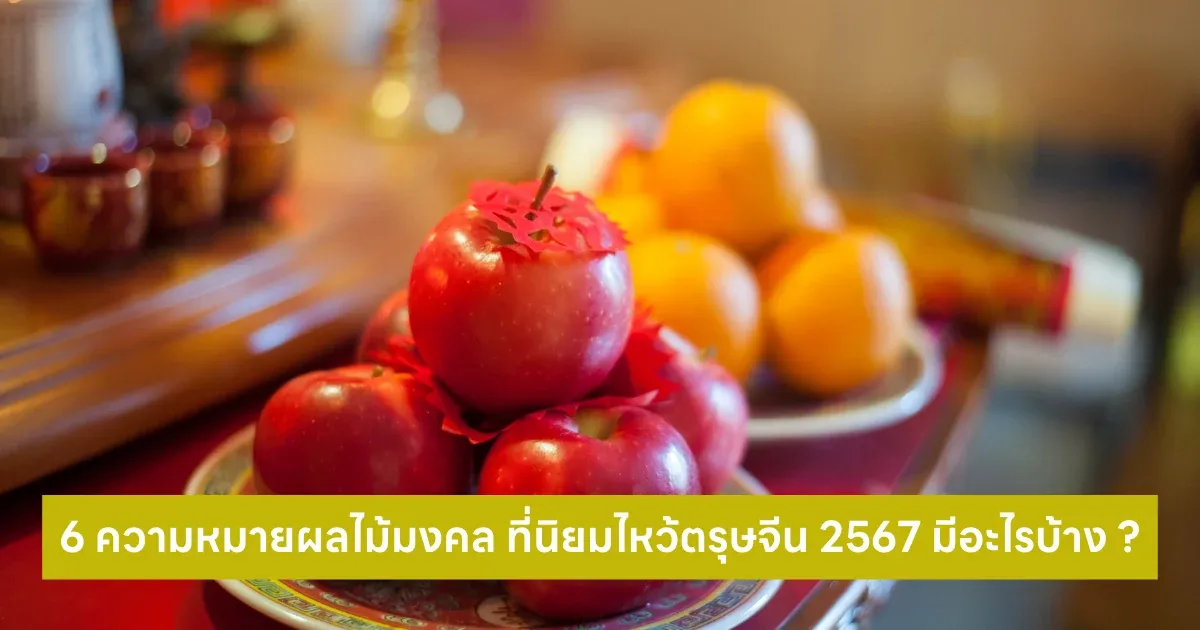
| Fruit | Auspicious meaning |
|---|---|
| Oranges | Good fortune and prosperity: a fixture of Chinese offerings at every festival |
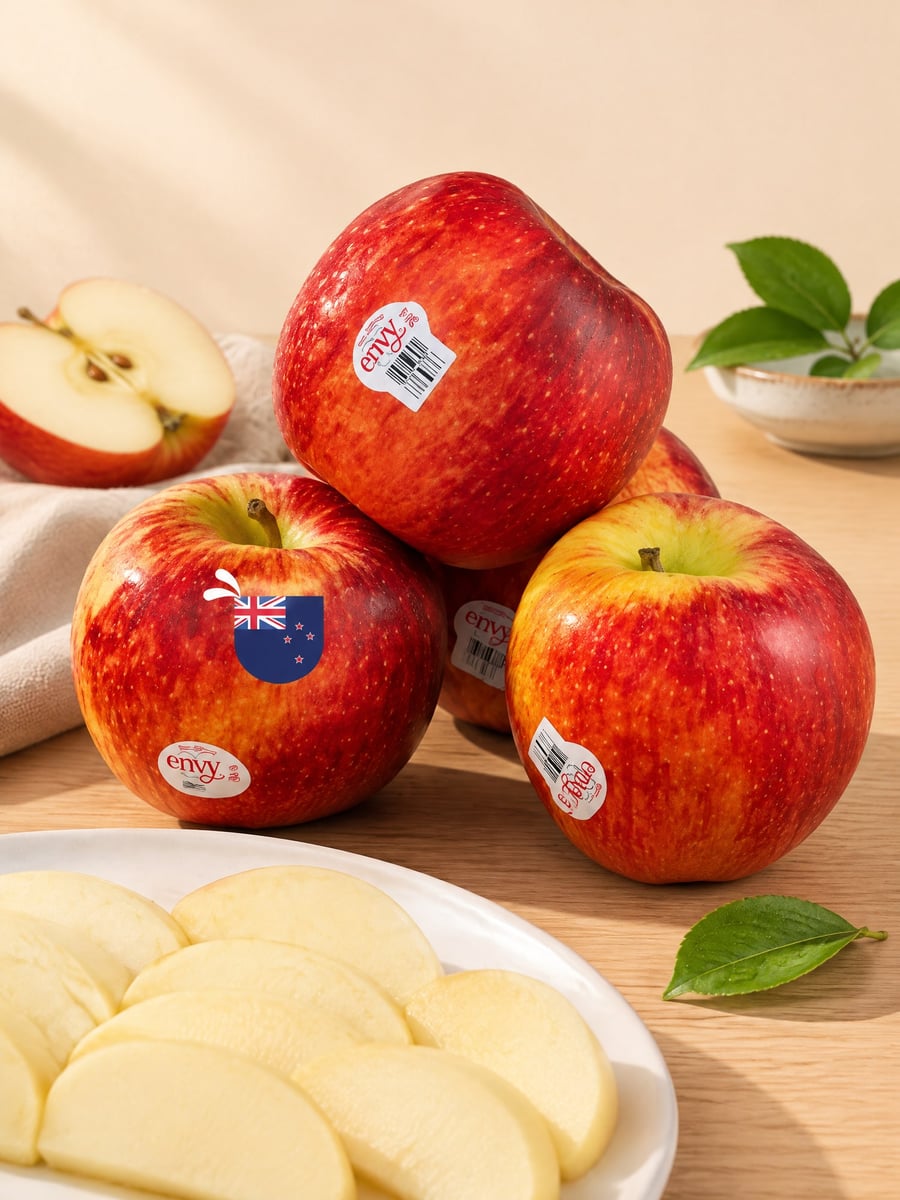
| Apples | Peace and calm (the Chinese “pingguo” sounds like “ping’an,” meaning peace) |
| Pears | Money flowing in, and luck that never runs out |
| Grapes | Growth and abundance: heavy bunches, like wealth piling up |
| Bananas | Beckoning good fortune into the home, and descendants to carry on the family line |
For the full meaning of each auspicious fruit, read 5 auspicious fruits for offerings and what they mean. The same principles apply to both Chinese New Year and Sart Jeen.
Curious what each fruit symbolizes, and when to use a set of 5 versus a set of 9? Read more in Auspicious fruits explained.
Fruits Traditionally Kept Off the Offering Table
By long-held belief, fruits whose Thai names sound like something unlucky are not offered. These include sapodilla (“lamut,” which echoes “mut,” to sneak away or be underhanded), mangosteen, langsat (“langsat,” where “lang” sounds like “bad omen”), salak (“rakam,” as in a Thai phrase for heartbreak) and Indian jujube. Some families also avoid spiky fruit like durian, seeing its sharp thorns as unsuitable for the offering table.
What Color Should You Wear on Sart Jeen?
Traditionally, people dress neatly in bright or auspicious colors and avoid all-black or all-white outfits, which are the colors of mourning.
That said, every family has its own customs. What really counts is dressing neatly and coming with a sincere heart, not the color of your shirt.
Why It Matters: The Real Meaning of Sart Jeen
- Gratitude: one day a year set aside to properly remember the loved ones who came before us.
- Family time: the offering table is the best excuse for every generation to come home.
- Giving: making offerings to forgotten spirits is a way of sharing with those no one remembers.
- Passing on tradition: the children standing with palms pressed together beside the table today are the ones who’ll set it up 30 years from now.
The next Chinese festival after Sart Jeen is the Mid-Autumn Festival. See the date and offerings in Mid-Autumn Festival 2026.
Complete Sart Jeen Offering Sets, Ready for Your Table
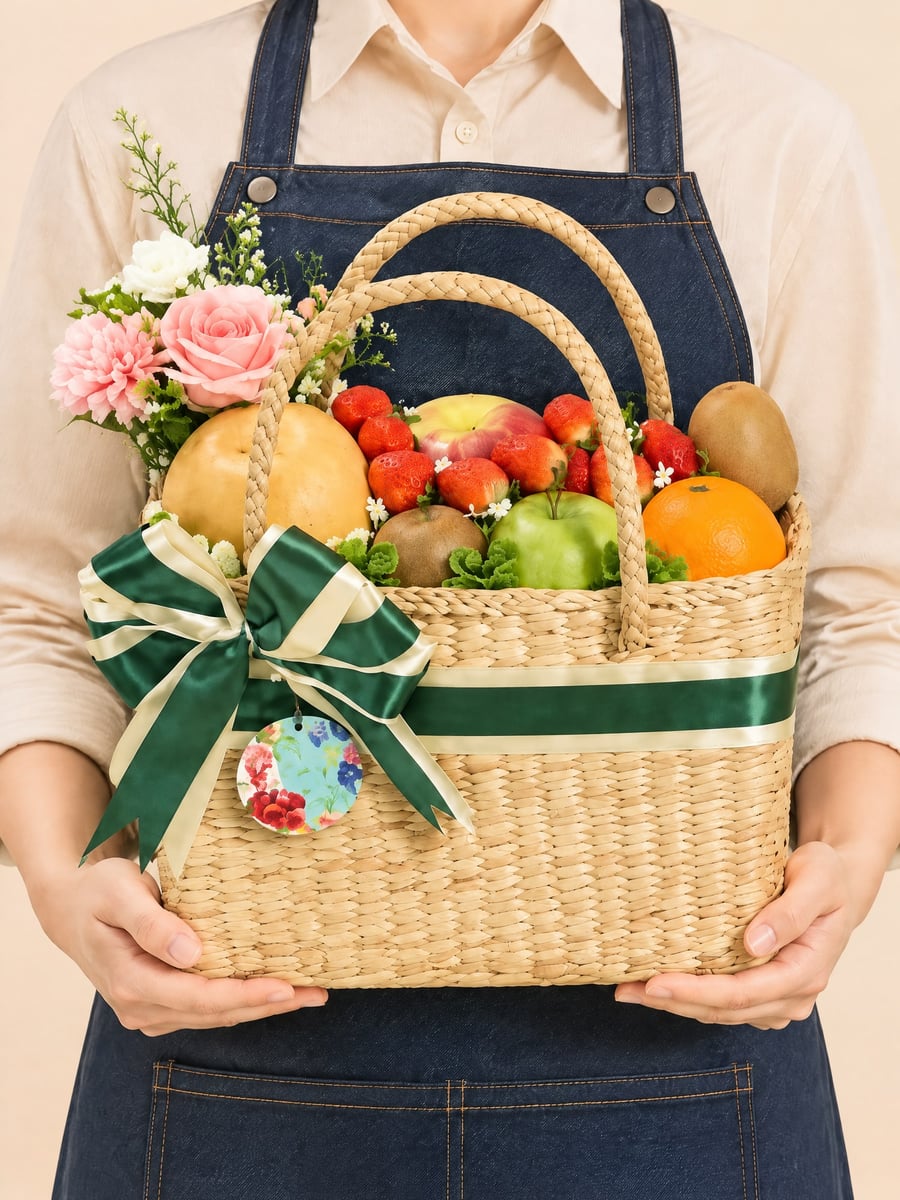
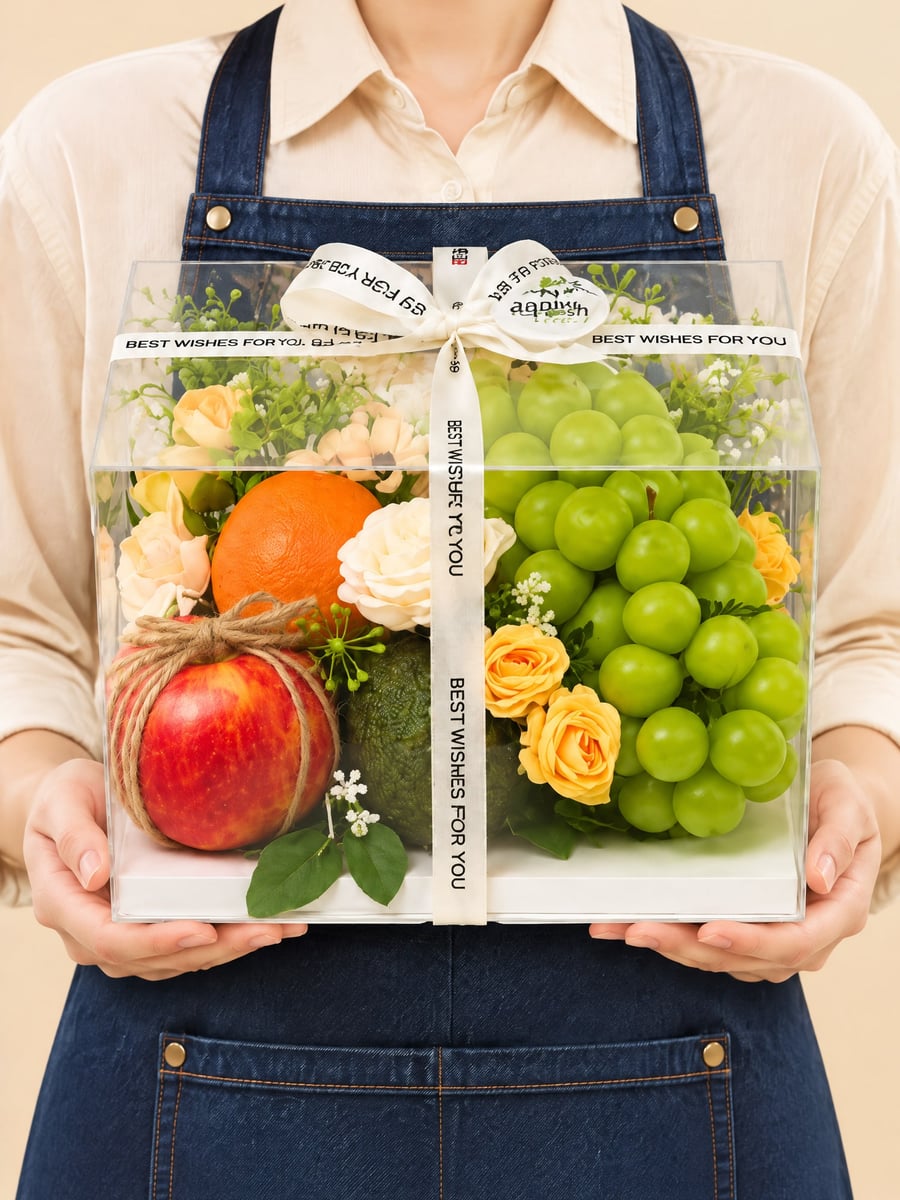
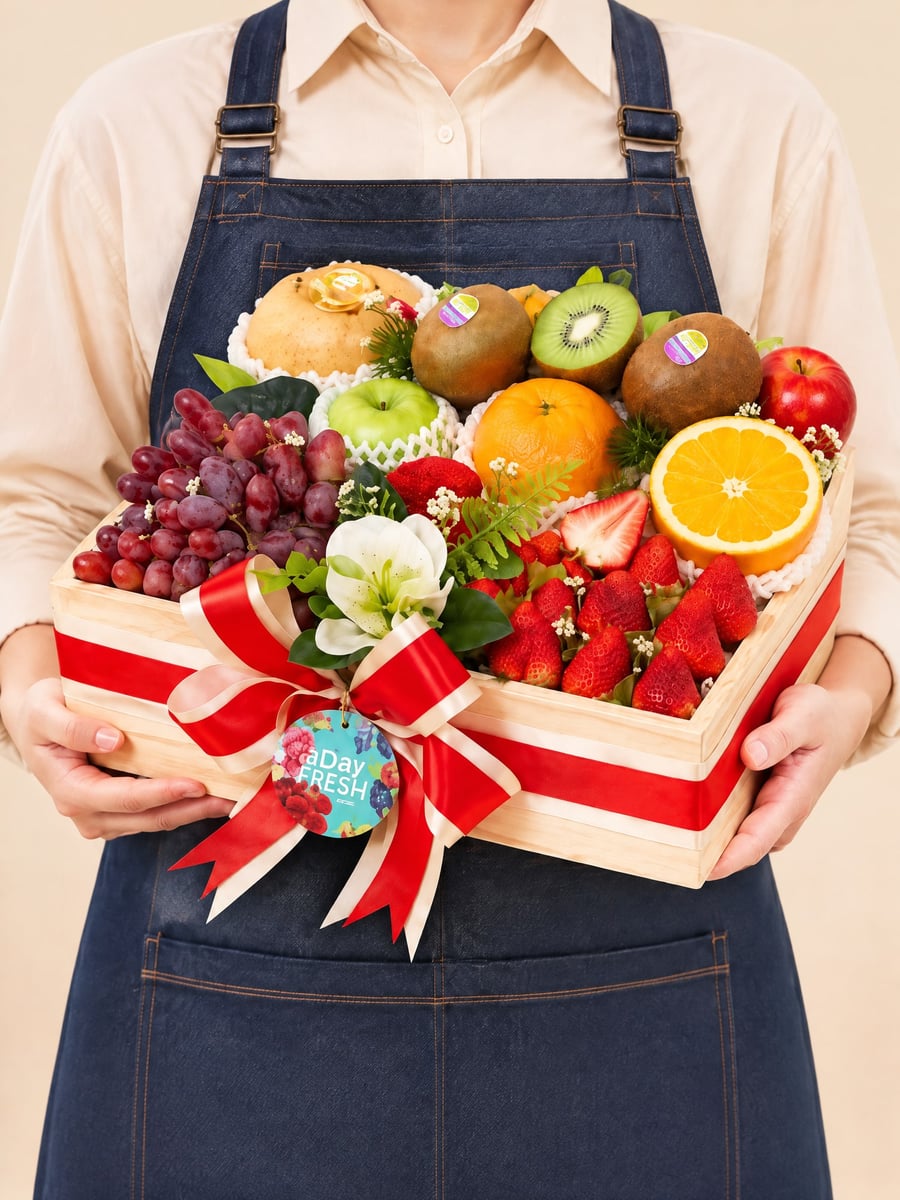
Only fruit with auspicious meanings, arranged fresh on delivery day. 3 sizes to suit your offering table, from 590 THB
Order today for 3-hour express delivery across Bangkok, in time for your offerings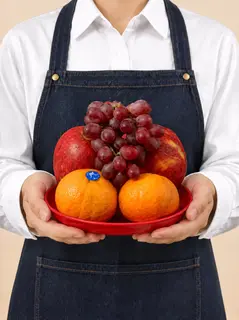
Apples, red grapes and oranges on a red plate, a small offering set ready to use

Six fruits incl. bananas, pomegranates and dragon fruit on a red tray, for an auspicious offering
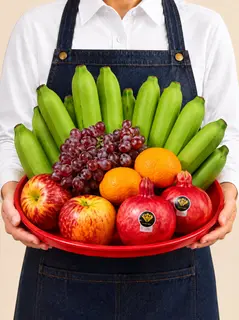
Bananas, red grapes, oranges, apples and pomegranates on a red tray, a complete offering set